
Q3 2026 · As at 19 September 2026
Manchester Regeneration & Investment Briefing
Funding, places and delivery.

Contents of this edition
Funding, places and delivery. A briefing for the organisations bringing forward homes and regeneration across the city of Manchester.

Dates and decisions to watch
| As at 18 September 2026 | Published position |
|---|---|
| Manchester Local Plan | Publication (Regulation 19) consultation opened 17 August 2026 and runs to 28 September 2026, confirmed on the council's Local Plan pages. The Local Development Scheme 2026–2027 amends submission of the plan from 30 November 2026 to 31 December 2026. An adoption date is not published in the current LDS; the plan is to be deliverable by 2039. [5,6,35,36] |
| Places for Everyone | Adopted 20 March 2024, effective from 21 March 2024. It remains the strategic plan for Manchester and eight other GM districts. [21,22] |
| GMCA affordable housing | Good Growth Fund applications for affordable housing are rolling, with no fixed deadline; subject to funding and priorities. [3] |
| Pride in Place neighbourhoods | Five Manchester areas in two different cohorts, with two different deadlines. Benchill South & Wythenshawe Central, Harpurhey South & Monsall, Clayton Vale and Gorton South are phase 2 places: their Pride in Place Plans are due to MHCLG by 30 November 2026. Moss Side West was named on 20 March 2026 in the phase 2 expansion, so its plan is due by 26 February 2027. Community chairs appointed by July 2026 and boards being formed. [10,11,29,30,42] |
| Pride in Place monitoring | The MHCLG monitoring portal opens on 1 October and closes on 29 October 2026. For all five Manchester places this is the first monitoring return. [29,46] |
| Collyhurst phase two | Consultation held early March 2026 on around 550 homes. The council's Collyhurst page still describes phase two as at the start of the regeneration process, with further consultation through 2026 and no planning application submitted or consent date published. [8,9,38] |
Figures in this briefing cover different programmes, geographies and periods. They should not be added into a single city investment total.
The funding landscape
Up to £46 billion over ten years
Homes England and its subsidiary, the National Housing Bank, have up to £46 billion to deploy across England to 2036. These are the principal streams. [1]
The joint Investment Prospectus, published on 31 March 2026 ahead of the Bank's opening on 1 April, brings grant, land and finance into one framework. The Bank aims to attract more than £50 billion of additional private capital over the decade.
| Stream | Amount | What it funds / who it reaches |
|---|---|---|
| Social and Affordable Homes Programme 2026–2036 | At least £27bn outside London; £39bn nationally, including London | Capital grant for social and affordable rent, shared ownership, supported housing and estate regeneration. Registered Providers, councils, housebuilders and community-led organisations, through continuous market engagement or strategic partnerships. |
| Housing and Infrastructure Capital Grant | About £3.1bn (Homes England's share of the £5bn national pot*) | Land assembly, remediation and strategic infrastructure; dedicated viability-gap support planned for later in 2026/27. Councils, developers and landowners with sites the market cannot unlock alone. |
| National Housing Delivery Fund (debt, equity and guarantees) | Up to £16bn | Loans, equity and guarantees, including funding that may be devolved to mayoral authorities. Housebuilders, Registered Providers, funds and lending partners. |
*The prospectus describes the agency's share as £3.1bn, subject to final confirmation. These are programme envelopes, not a ring-fenced allocation to Manchester.
Programme milestones
| Date | Milestone |
|---|---|
| 31 March / 1 April 2026 | Investment Prospectus published / National Housing Bank opens |
| 25 August 2026 | First wave: £9.58bn to 33 strategic partners outside London [2] |
| Later in 2026/27 | Dedicated viability-gap grant planned [1] |
| To 2036 | Ten-year programme period |
Land, grant and finance can be combined around the needs of a scheme.
Grant, land and finance (products and routes)
Which support fits a scheme depends less on its size than on what is holding it up: a funding gap, a difficult site, or the tenure of the homes to be delivered. [1]
| Family | Product | Purpose | Typical user |
|---|---|---|---|
| Grant | Social and Affordable Homes Programme | Affordable tenures, supported housing and estate regeneration | RPs, councils, developer partners |
| Grant | Housing and Infrastructure Capital Grant | Viability gaps, infrastructure, land assembly and remediation | Councils, landowners, master developers |
| Land | Homes England land | Acquisition, enabling and disposal through sale, lease, development agreement or joint venture | Developers of all sizes |
| Finance | SME Accelerator Loan | Site finance for smaller builders establishing a track record | SME housebuilders |
| Finance | Revolving credit facility | Multi-site support alongside commercial lenders | Growing builders |
| Finance | Senior and mezzanine debt | Project funding for build to rent, later living and brownfield schemes | Developers and funds |
| Finance | Corporate lending | Balance-sheet finance for growth, including modern methods of construction | Housebuilders |
| Finance | Infrastructure loans | Long-term finance, up to 15 years, for upfront infrastructure | Developers and councils |
| Finance | Low-interest RP loans | Unlocking capital investment in social and affordable homes | Registered Providers |
| Finance | Equity | Minority investment in vehicles typically delivering more than 3,000 homes | Funds and partnerships |
| Finance | Guarantees | Bonds and loans to reduce institutional financing costs | Funds and RPs |
Two grant routes in Greater Manchester. Housing and infrastructure grant is normally expected to come first through GMCA's integrated settlement. Social and Affordable Homes Programme grant remains administered by Homes England. The National Housing Bank makes its own finance decisions while working alongside the agency.
Greater Manchester: how the regional routes fit together
For a Manchester scheme, the first conversation depends on the funding gap. Homes England and GMCA have complementary roles; a regional headline figure is not a city allocation.
First-wave SAHP estimate for Greater Manchester
- £529m estimated strategic-partnership spend to support c.4,400 homes across Greater Manchester, from MHCLG's regional funding breakdown of 24 August 2026; a regional estimate, not a borough award. [49]
- The 25 August 2026 GOV.UK release names 33 strategic partners outside London and gives no grant or homes total; the published partner table sums to £9,584.1m and 73,617 homes, and no Manchester allocation is published. [2]
- The primary published regional figure is the government's indicative SAHP spend for Greater Manchester across the ten-year programme: £1.8bn, set out in the 6 November 2025 MHCLG release on mayoral influence over the programme. [44]
| Scheme requirement | Route to establish | What to resolve |
|---|---|---|
| Social and affordable homes | Homes England's SAHP, through strategic partnership or continuous market engagement. | Eligible tenure, delivery partner, grant requirement and programme timing. [1] |
| Land, infrastructure or abnormal costs | Manchester City Council and GMCA; the integrated settlement is normally the first route for housing and infrastructure grant. | Why the site cannot proceed, what intervention unlocks it and the local strategic case. [1] |
| Additional affordable-housing support | GMCA's Good Growth Fund social and affordable housing team. | SAHP should be secured or actively progressing; explain the remaining gap and deliverability. [3] |
| Debt, equity or guarantees | National Housing Bank via Homes England. | Borrower or investment structure, commercial funding, security and the route to repayment. [1] |
Good Growth Fund: current position. Affordable-housing applications are rolling, with no fixed deadline and subject to available funding. Most other GGF applications start through the relevant local authority. [3]
Manchester's published share. The council reported an £86m Good Growth Fund settlement for the city, made up of £26m towards 423 homes in Wythenshawe and £60m for a new Metrolink stop at Sandhills in Collyhurst to unlock later phases of Victoria North. These are two separate interventions announced in one release, not a single housing grant. [7]
Practical implication. Keep one scheme funding schedule that identifies each source, eligible cost, outstanding decision and condition. Ask the funders to agree which costs their contributions support and how those contributions fit together.
Regional ambitions to design for
GM's published priorities include 10,000 energy-efficient Social Rent homes by 2030. Places for Everyone, covering nine GM authorities including Manchester, seeks 50,000 affordable homes by 2039, including 30,000 for social or affordable rent. These are regional ambitions across delivery routes. [21,22]
Who decides what (decisions and public contacts)
Funding, planning and delivery sit with different organisations. Identify the decision you need before choosing the first conversation.
- Homes England / National Housing Bank — Homes England takes final SAHP funding and contractual decisions. The Bank assesses its finance investments. [1,18]
- Greater Manchester Combined Authority — Shapes regional priorities, tenure mix and priority sites; aligns investment through the Good Growth Fund and the integrated settlement. [3,21]
- Manchester City Council — Local housing need, planning and council land; accountable body for neighbourhood funding; joint-venture partner on Victoria North and Wythenshawe. [4,7,8]
- Neighbourhood boards — Develop local plans with the community and shape investment priorities. Council accountability and national programme requirements still apply. [29,30]
- Scheme owner and delivery team — The RP, council company, joint venture or developer assembles the scheme, appoints its team and manages delivery. Establish the actual commissioning organisation. [16]
Public routes for the next conversation
| Enquiry | Public route |
|---|---|
| National grant / finance | enquiries@homesengland.gov.uk |
| GMCA housing / infrastructure | Good Growth Fund teams and funding guidance |
| Manchester city-centre growth and regeneration | city.centre@manchester.gov.uk · 0161 234 3988 [33] |
| Council switchboard | 0161 234 5000 [33] |
| Neighbourhood projects | Pride in Place programme and board pages [10] |
| Planning / procurement | Local Plan consultation · The Chest [5,16] |
A useful first enquiry names the site, landowner, proposed use, delivery lead, funding gap and next decision. Attach a concise programme and explain what the requested intervention changes.
Accessing programme grant: a route for smaller providers
A first-wave strategic allocation is one route into delivery. Continuous Market Engagement also gives eligible organisations a direct route to Homes England.
- Continuous Market Engagement — Open for individual schemes and portfolios, while funding remains available. Designed to accommodate smaller partners, new entrants and complex projects. [19]
- Strategic partnerships — Programme-level allocations support delivery at scale. The initial bidding round closed on 15 April 2026; future rounds will be announced. [18]
| Route | Practical fit and requirements |
|---|---|
| CME general | A direct scheme bid. Establish eligible tenure, costs, delivery readiness and grant need with Homes England. [18,19] |
| CME portfolio | Discuss the pipeline before bidding. Initial portfolios normally deliver 300–500 homes; named sites should start by 31 March 2028 and complete by 31 March 2032. [19] |
| Delivery partnership | An eligible RP or council can work with a strategic partner under the programme's delivery-partner rules. Owning the funded homes is a different role from supplying construction services. [18,20] |
Before a grant application
Organisations need Homes England Investment Partner qualification to receive grant. New partners can apply for that status alongside the funding application. Programme qualification and regulatory registration are separate steps. [19]
The bid should show how it meets local housing need and regional priorities. Greater Manchester seeks at least 60% Social Rent through SAHP, alongside supported housing, regeneration and better alternatives to temporary accommodation or costly care settings. [21]
In Manchester, tenure language matters. The council uses Manchester Living Rent, capped at the Local Housing Allowance rate, alongside Social Rent in its own schemes. Establish which definition a funder, the council and the eventual landlord are each using before fixing an appraisal. [23]
How to prepare the discussion
Bring a site schedule, proposed tenure mix, cost plan, planning position, delivery programme and confirmation of the intended landlord. Explain what is ready now and which dependencies still need resolving.
Places and programmes (city programmes)
Manchester runs several large housing-led programmes at once, on different timetables and through different commissioning bodies. Establish the live phase and the organisation commissioning it.
Victoria North — 15,000 homes across seven neighbourhoods
Victoria North is a joint venture between Manchester City Council and Far East Consortium, described by the council as the largest regeneration programme in the city's history. Published scope is around 15,000 homes over roughly two decades across seven north Manchester neighbourhoods, with City River Park as the landscape framework. [8,9]
The first phase includes 244 homes at Collyhurst Village and 30 social rented homes in South Collyhurst. Confirm which plot, phase and tenure is being commissioned rather than referring to the programme as a whole. [8]
Collyhurst phase two — around 550 homes
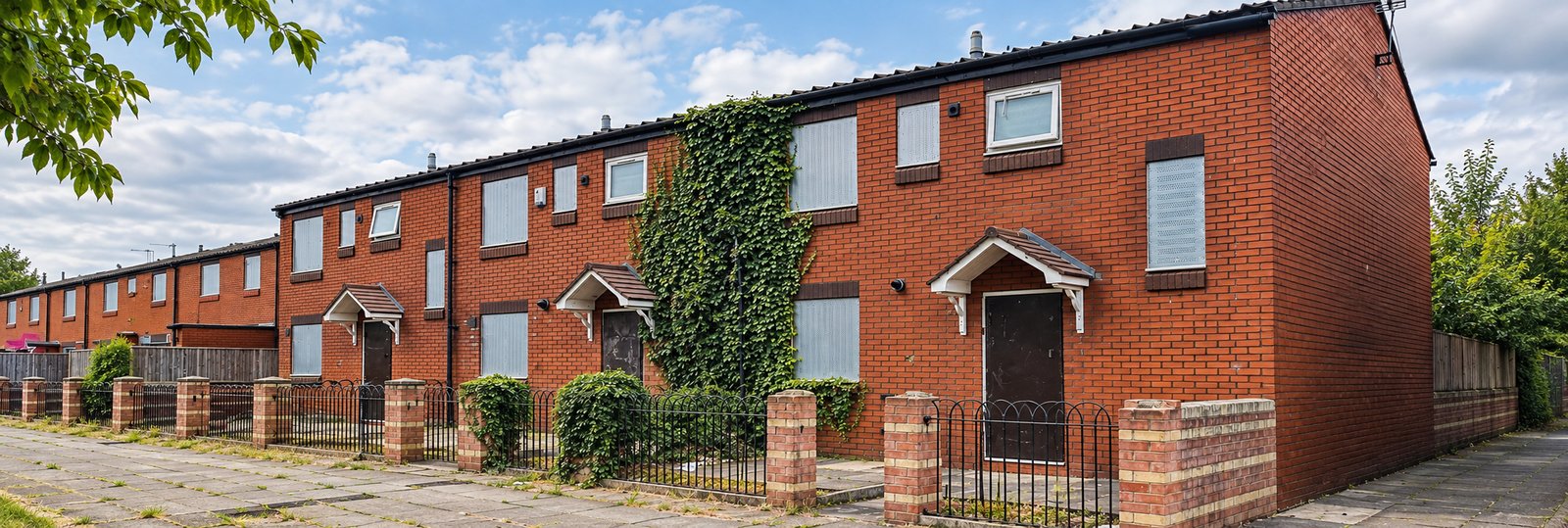
The council and FEC consulted residents in March 2026 on phase two, covering the area north of Harrowby Drive and south of Queens Road, immediately east of phase one. The published ambition is around 550 homes with a significant proportion for social rent, alongside an extended community park. The council's own Collyhurst page, read on 19 September 2026, states that phase two is in Collyhurst Village, currently occupied by 158 homes, that the council is "at the start of the regeneration process" following the first consultation events at the end of February and beginning of March 2026, and that further consultation with more detailed plans would take place through 2026. No planning application had been submitted at that point, and no submission or consent date is published. Collyhurst Village proposals are intended to be brought forward over the next three to five years, with South Collyhurst after that. [8,9,38]
The £60m Good Growth Fund award for a Metrolink stop at Sandhills is the transport intervention intended to unlock later phases. [7]
Wythenshawe town centre — up to 2,000 homes in a £500m programme
Manchester City Council and placemaker Muse are delivering a long-term town-centre regeneration described as £500m, with up to 2,000 homes over 10 to 15 years and a Civic development including a culture hub and food hall, targeted to open in 2027. Kickstart funding is £20m of government regeneration money with an £11.9m council contribution. [12,13,14]
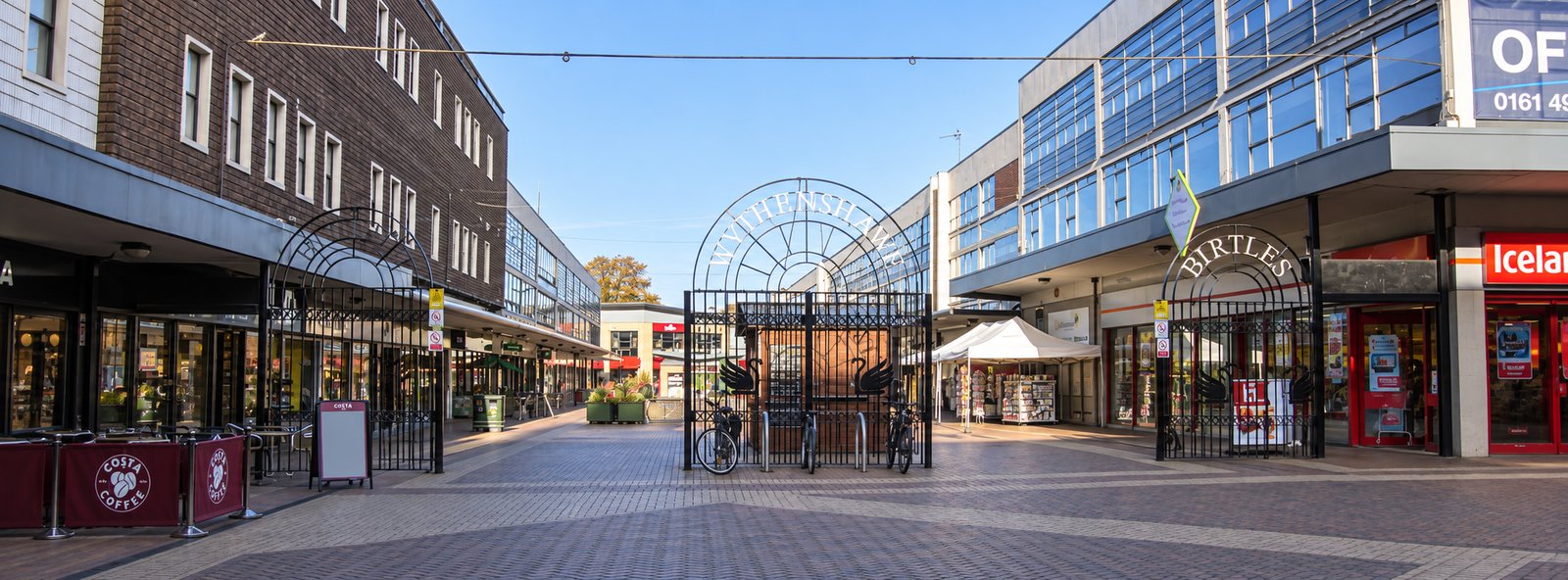
The first housing phase is 422 affordable homes brought forward by Muse with Wythenshawe Community Housing Group, submitted as three applications in December 2025: Brotherton House (216 homes, including 109 extra-care), Alpha House (125 apartments, including 16 wheelchair-accessible) and C2 The Birtles (around 81 apartments with ground-floor retail). All three have consent: the council confirmed on 27 March 2026 that Alpha House was approved, the third of the three sites, after C2 The Birtles and Brotherton House were approved earlier that month, giving approval for 422 social rent homes in total. The 423-home figure used in Good Growth Fund reporting is a separate count and the one-home difference is not reconciled in published council or Muse material. [12,14,39]
Separately, the council's £26m Good Growth Fund award for Wythenshawe is described as delivering 423 homes on brownfield sites: 233 social rent, 109 extra care and 81 affordable. The 422-home planning total and the 423-home funding total are published by different bodies and are not reconciled in the sources; do not add them together. [7,12,14]
Mayfield — 879 homes consented within a £1.4bn scheme
Mayfield, beside Piccadilly station, is led by Landsec in partnership with Manchester City Council, TfGM and LCR. Planning permission for the first residential phase of 879 homes was granted in August 2025 — the first residential development on the site in over a century — designed by Studio Egret West and shedkm for Landsec, alongside more than 36,000 sq ft of ground-floor commercial space and a 40% extension to Mayfield Park. The intention that 20% are affordable comes from scheme publicity and is not verified from the council. The council's own Mayfield page describes the 20-acre site as delivering up to 1,500 new homes; the higher "around 2,000 homes" figure used elsewhere is not supported by the council page and has been removed. Completion is described as mid-2030s. [15,24]
Ancoats and New Islington — affordable phases inside a city-centre area
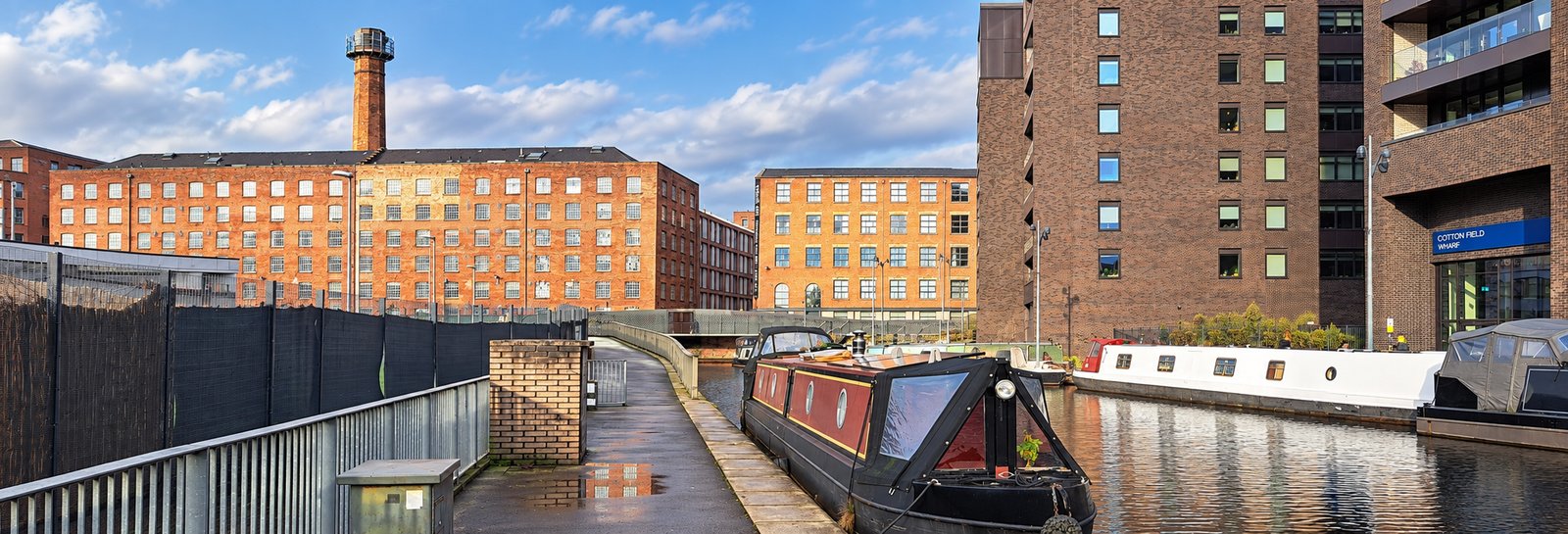
Ancoats and New Islington continue to deliver residential phases on former industrial and mill land. Published examples include Wiremill Court at Downley Drive (75 affordable homes, final phase), the Ancoats Dispensary scheme of 39 one- and two-bed apartments for affordable rent in partnership with the council and part funded by Homes England, and a Poland Street Zone scheme of 118 homes. A Local Infrastructure Framework for the area was approved in February 2025. [25]
District centres — a parallel programme
The council's district centres programme is running in north, east and south Manchester. Published 2026 positions include a delivery partner for a new public square at Moston Lane being appointed by March 2026 within a £90m programme that includes up to 120 social and genuinely affordable homes, and Gorton Market works completing later in 2026. [26]
Pride in Place: five boards, five local plans
Five Manchester neighbourhoods have been selected for up to £20m each over ten years. They sit in two different cohorts of the programme, announced separately and with separate deadlines, so their allocations should be listed individually rather than added:
- Phase 2 (GOV.UK phase 2 methodology note, four Manchester places): Benchill South & Wythenshawe Central, Harpurhey South & Monsall, Clayton Vale and Gorton South — up to £20m each, Pride in Place Plan due to MHCLG by 30 November 2026.
- Phase 2 expansion (named 20 March 2026, one Manchester place): Moss Side West — up to £20m, Pride in Place Plan due to MHCLG by 26 February 2027.
The council's own news release of 20 March 2026 describes the five together as "an additional £100m of community funding … committed to Manchester over the next decade". That is the council's aggregation of two cohorts and is not a single award, a capital pot available now or an annual budget. [10,11,29,42,47]
| Neighbourhood | Published position / next conversation |
|---|---|
| Benchill South & Wythenshawe Central | Community chair appointed and board being formed. Overlaps the Wythenshawe town-centre programme; establish which budget a project belongs to. [10,11,12] |
| Clayton Vale (parts of Clayton, Openshaw, Newton Heath, Miles Platting) | Community chair appointed; board formation and engagement underway. [10,11] |
| Gorton South (parts of Longsight, Gorton & Abbey Hey, Levenshulme) | Community chair appointed; board formation and engagement underway. Separate district-centre investment is also live in Gorton. [10,11,26] |
| Harpurhey South & Monsall (parts of Harpurhey, Moston, Crumpsall) | Community chair appointed; board formation and engagement underway. [10,11] |
| Moss Side West (phase 2 expansion) | Parts of Moss Side and Whalley Range, announced 20 March 2026 as the fifth Manchester neighbourhood and named in the phase 2 expansion methodology note. Chair named as Hassan Hassan in July 2026. Its Pride in Place Plan is due by 26 February 2027, three months later than the other four. [11,29,42,47] |
Bring a project that can be delivered
- Need, ownership and consent — Explain who benefits and how the proposal responds to residents. Identify land control, a delivery lead, consents and dependencies.
- Capital and continuing costs — Set out works, development costs and contingency, then identify the asset owner, operating budget and maintenance responsibility.
National guidance sets a 30 November 2026 plan milestone for the four phase 2 places and 26 February 2027 for Moss Side West as a phase 2 expansion place. Boards must have at least eight members; at least 51% should live or work locally. Each board co-produces a ten-year plan with a shorter investment plan. Public contact routes: page 6. [29,30,42]
At the time of writing, no open Manchester Pride in Place project call is verified. The council's own Pride in Place route for residents was a shaping survey, and its consultation page records that it is now closed. Use the board and programme pages rather than assuming an application window is live. [10,37]
Local investment and project calls: different pots, different decisions
Manchester's neighbourhood funding, district-centre funding and town-centre regeneration money operate at different scales and on different timetables.
Pride in Place: up to £20m per neighbourhood, in two cohorts [10,11,42]
| Component | What the headline includes |
|---|---|
| Up to £20m each, phase 2 | Benchill South & Wythenshawe Central, Harpurhey South & Monsall, Clayton Vale, Gorton South — over ten years, board-led, plans due 30 November 2026. [10,29,42] |
| Up to £20m, phase 2 expansion | Moss Side West, named 20 March 2026 — over ten years, board-led, plan due 26 February 2027. [11,29,42] |
| The council's "£100m" | Manchester City Council's own aggregation of the five commitments across the decade. It spans two cohorts, is not an annual budget and is not a capital pot available now; do not add it to Impact Fund or other programme figures. [11,47] |
Manchester Pride in Place Impact Fund — £750,000 in each of two years
Annex A of the government's grant determinations lists Manchester City Council at £750,000 for 2025/26 and £750,000 for 2026/27, awarded as a Section 50 non-ringfenced transfer for capital expenditure only, subject to the programme Memorandum of Understanding. Each determination names 94 authorities. The determinations do not set out target wards or a commitment deadline for Manchester; those sit in the MoU and council papers. [31,43]
Note: target wards, projects and a commitment deadline for Manchester's Impact Fund allocation are not verified. No council report setting them out could be found on manchester.gov.uk or the council's committee system at the time of writing.
Other local funds
| Fund | Published position |
|---|---|
| Levelling Up Fund / Local Regeneration Fund | £20m secured for Wythenshawe town centre, with £11.9m from the council, to kickstart the Civic redevelopment. [13,26] |
| UK Shared Prosperity Fund | GOV.UK's published UKSPF allocations table, in the memo setting out how mayoral combined authority totals are arrived at, gives Manchester's constituent-authority core allocation for 2022–2025 as £16,613,628 within the Greater Manchester total. Around £2.8m of it was directed to Moston Lane and Withington district centres. The Communities and Place sub-figure of £5,013,823 remains not verified: it is not broken out on the GOV.UK table and the original council news article URL returns 404. [27,48] |
| GM Good Growth Fund | £86m to Manchester announced 18 March 2026 and confirmed on the council's own news page: £26m for 423 homes on brownfield sites in Wythenshawe (233 social rent, 109 extra care, 81 affordable) and £60m for a new Metrolink stop at Sandhills in Collyhurst. This follows around £200m to Manchester in the November 2025 round. [7,40] |
| Brownfield land funding | The council describes the 423-home Wythenshawe Good Growth Fund package as delivery on brownfield sites. A separate borough brownfield allocation is not verified here. [7,40] |
These are separate programmes with separate accountable bodies and timetables. Do not present them as one investment figure.
Homes, partners and local need
The council's Housing Strategy 2022–2032 sets a target of at least 36,000 homes of all tenures by 2032, including 10,000 social, council and genuinely affordable homes — an average of around 1,000 affordable homes a year. [4]
The council's own 14 January 2026 update states that 2,993 homes of all tenures were delivered in 2025, of which 791 were affordable — 21% of the 10,000 affordable target and 31% of the 36,000 overall target reached. It records 1,459 affordable homes on site (814 social rent) and a further 2,704 homes with permission or an application submitted (1,219 social rent), with more than 880 affordable homes expected to start on site or enter consultation during 2026 and 230 affordable completions on council-owned land in 2025. Other releases quote around 795 affordable completions; cite the specific council update you are relying on. [23]
| Partner / example | Documented local delivery |
|---|---|
| This City (council-owned development company) / Rodney Street, Ancoats | 128 low-carbon apartments and townhouses, a third at Manchester Living Rent. The company's stated ambition is around 500 homes a year on council land. [28] |
| Muse with Wythenshawe Community Housing Group / Wythenshawe Civic | 422 affordable homes across three sites, all for social rent as submitted; Alpha House and two further sites consented in 2026. [12,14] |
| Manchester City Council with Far East Consortium / Collyhurst | 244 homes at Collyhurst Village plus 30 social rented homes in South Collyhurst in phase one; around 550 homes proposed in phase two. [8,9] |
| Southway Housing Trust | Up to 1,300 homes across Greater Manchester and Cheshire; Two Didsbury Point delivered 30 social rent and 46 shared ownership apartments on the former Withington Community Hospital site. Southway and WCHG have publicly explored a merger with a stated commitment to 2,700 affordable homes by 2030. [32] |
| One Manchester | Published scheme of 24 homes: 10 Shared Ownership, 10 Affordable Rent and four Social Rent, built November 2023 to July 2025. [23,32] |
These are examples of local activity, not a complete provider list, procurement shortlist or evidence of a new SAHP award.
For development and asset teams
Agree tenure, accessible homes and support needs before fixing the unit mix. Bring the operator into the appraisal: nominations, management, service charges and whole-life maintenance. Keep new-supply budgets separate from existing-stock investment. In Manchester, confirm early whether a scheme is Social Rent, Manchester Living Rent or another affordable tenure, because the terms are not interchangeable. [23]
Delivery and the supply chain: from scheme assembly to appointment
The national programme supports delivery through councils, Registered Providers and developers. In Manchester, much of the largest activity runs through joint ventures — with Far East Consortium at Victoria North, Muse at Wythenshawe and Landsec at Mayfield — and through the council's own company, This City. The local supply chain enters through their projects, procurement routes and contractor packages. [8,12,15,28]
| Stage | Lead organisations | Specialist input |
|---|---|---|
| 01 · Site and viability | Council estates, landowner, developer, RP, funders | Land and planning advice, valuation, surveys and abnormal-cost assessment |
| 02 · Enabling | Council, developer, Homes England / GMCA where relevant | Ground investigation, remediation, ecology, civils and utilities |
| 03 · Funding and agreement | RP, developer, public funder, lender | Legal, cost advice, programme and development finance |
| 04 · Design and consent | Client team, architect, planning authority | Architecture, engineering, arboriculture and technical coordination |
| 05 · Construction | Main contractor and client delivery team | Groundworks, structure, roofing, M&E, scaffolding and site services |
| 06 · Handover and operation | RP asset team, council or other operator | Commissioning, landscaping, compliance and maintenance |
Finding the actual route to work
Manchester City Council uses The Chest, the North West procurement portal, as its e-tendering route; suppliers register free at the-chest.org.uk to receive matched opportunity alerts. Higher-value notices also appear on Find a Tender. A pipeline entry is a forecast; the live notice establishes the requirements and timetable. [16,17]
Joint-venture and RP appointments have their own routes. Confirm whether work is being commissioned directly by the council, by the joint venture, through a framework or by a main contractor. A funding announcement does not itself create an open invitation to tender.
Social value. Manchester City Council weights social value at 20% of the procurement evaluation and publishes a social value toolkit for bidders. Bids are commonly expected to address the Greater Manchester Good Employment Charter and the Real Living Wage. Agree measurable delivery commitments with the commissioner rather than treating them as a separate publicity activity. [16]
The advertiser directory is not an approved-supplier list and does not replace procurement or suitability checks.
Skills and delivery capacity: build the workforce into the plan
Construction skills, training capacity and local employment should be considered while the scheme and its contracts are being assembled.
Local construction skills provision
The Manchester College, part of the LTE Group, is the city's principal further education provider, operating campuses including Openshaw, Harpurhey, Wythenshawe and the city centre, with industry-standard construction workshops. Apprenticeship and work-based learning delivery across the group also runs through Total People. The college's Construction and Engineering pages list campuses at City Centre, City Labs, Openshaw, Harpurhey, Wythenshawe and Nicholls, describe the training centre as one of the most technically advanced in the North West, and state that purpose-built engineering facilities are coming in 2026/27. Employers with vacancies are directed to the college Job Shop at jobshop@tmc.ac.uk; the general number is 03333 222 444. [34,41]
Note: a Manchester-specific Construction Technical Excellence College equivalent to Wigan's is not verified. The nearest verified regional provision is The Manchester College's construction workshops and apprenticeship offer.
Three campuses — Openshaw, Harpurhey and Wythenshawe — sit inside or beside current regeneration and Pride in Place areas, which makes them a practical starting point for a local labour and training conversation. [34]
- Forecast — Trades, numbers and start dates
- Agree — Training, supervision and delivery partners
- Evidence — Starts, qualifications and sustained work
A practical workforce brief for a live scheme
| Agree early | What to record |
|---|---|
| Demand and timing | Map likely labour needs to the programme: enabling works, structure, services, finishes and handover. |
| Employer and supervision | Name the employing organisation, site supervisor and training partner. Allow time for recruitment and induction. |
| Learning and progression | Identify the relevant qualification, practical experience and route into continuing work. |
| Evidence of delivery | Agree how starts, completions, qualifications and employment outcomes will be recorded by the contract owner. |
Suggested briefing checklist for clients and contractors. Agree the actual commitments through the scheme's procurement and contract process.
Connect training with community benefit
Use the council's social value requirements as the anchor: name responsibilities, set outcomes that can be evidenced, and tie them to the neighbourhoods the scheme sits in. Where a scheme falls within a Pride in Place area, check whether the board's emerging plan identifies skills or employment priorities before proposing a separate initiative. [16,10]
- College enquiries: enquiries@tmc.ac.uk · 03333 222 444 [34]
- Council regeneration enquiries: city.centre@manchester.gov.uk · 0161 234 3988 [33]
Sources
Evidence and source notes
Research checked on 18 September 2026. Numbered references link to primary sources; public enquiry routes are on page 6.
- Homes England / National Housing Bank, Investment Prospectus 2026, 31 March 2026. URL added 19 September 2026. source
- Homes England / MHCLG, "Homes England and government confirm strategic partners set to help deliver once-in-a-generation increase in social and affordable homes across England", 25 August 2026. URL added 19 September 2026; the release names 33 partners outside London and gives no grant or homes total. source
- GMCA, Good Growth Fund: current funding opportunities and application routes. source
- Manchester City Council, Housing Strategy 2022–2032. source
- Manchester City Council, Manchester Local Plan consultation. source
- Manchester City Council, Manchester Local Plan (Publication Draft), 30 June 2026. source
- Manchester City Council, "Good Growth, Good News: £86m boost for affordable housing and regeneration in Manchester", 2026. source
- Manchester City Council, Victoria North regeneration. source
- Manchester City Council, "Victoria North: proposals for next phase of Collyhurst regeneration are presented to residents", 2026. source
- Manchester City Council, Pride in Place programme pages. source
- Manchester City Council, "Manchester £100m neighbourhood investment takes step as final community chair unveiled", 2026. source
- Muse, plans and approvals for 422 affordable homes in Wythenshawe. source
- Manchester City Council, "Wythenshawe Civic redevelopment to get £20m kickstart". source
- Manchester City Council, "Alpha House approved by Manchester City Council, unlocking 125 new homes for Wythenshawe", 2026. source
- Manchester City Council, Mayfield city-centre regeneration area. source
- Manchester City Council, business opportunities, tenders and social value toolkit. source
- The Chest, North West procurement portal. source
- Homes England, SAHP 2026–2036: eligibility, routes and funding decisions. URL added 19 September 2026. source
- Homes England, Continuous Market Engagement guidance, 24 February 2026. URL added 19 September 2026. source
- Homes England, Strategic Partnership guidance: delivery partners and requirements. URL added 19 September 2026. source
- GMCA, Places for Everyone. source
- Manchester City Council, Places for Everyone (adoption 20 March 2024). source
- Manchester City Council, "'Best year yet': Delivering Manchester's Housing Strategy", 2026. source
- Studio Egret West / Landsec, planning permission for the first homes at Mayfield Park, August 2025. source
- Manchester City Council, Ancoats and New Islington regeneration. source
- Manchester City Council, "Manchester's district centres regeneration accelerates with major investments and community-led plans", 2026. source
- Manchester City Council, "£3m investment in Moston and Withington confirmed from national Shared Prosperity Fund". source
- Manchester City Council / This City, Rodney Street project and development company. source
- MHCLG, Pride in Place programme delivery guidance: boards, accountability and key dates. URL added 19 September 2026. source
- MHCLG, Pride in Place programme prospectus, updated 1 September 2026: plan milestones. URL added 19 September 2026. source
- GOV.UK, Pride in Place Impact Fund: grant determinations 2026 to 2027 (Manchester £750,000). source
- Southway Housing Trust, what we are building / completed schemes. source
- Manchester City Council, contact the city centre growth and infrastructure team. source
- The Manchester College, apprenticeships and campuses. source
- Manchester City Council, Local Plan review – Publication stage (consultation 17 August to 28 September 2026). source
- Manchester City Council, Local Development Scheme 2026–2027, summary of amendments (Regulation 19 dates; submission amended to 31 December 2026). source
- Manchester City Council, "Pride in Place: tell us what you think about your area" (consultation now closed; five areas listed). source
- Manchester City Council, Victoria North regeneration – Collyhurst (phase one and phase two position). source
- Manchester City Council, "Alpha House approved by Manchester City Council, unlocking 125 new homes for Wythenshawe", 27 March 2026. source
- Manchester City Council, "Good Growth, Good News: £86m boost for affordable housing and regeneration in Manchester", 18 March 2026. source
- The Manchester College, Construction and Engineering courses, campuses and facilities. source
- MHCLG, Pride in Place Programme place lists: phase 2 methodology note (Manchester, 4 places — Benchill South & Wythenshawe Central; Harpurhey South & Monsall; Clayton Vale; Gorton South) and phase 2 expansion methodology note of 20 March 2026 (Manchester, 1 place — Moss Side West). source and source
- MHCLG, Pride in Place Impact Fund grant determinations 2025 to 2026, Annex A (Manchester City Council £750,000; 94 authorities listed). source
- MHCLG, "Mayors to lead the charge for thousands of new social homes", 6 November 2025 (indicative SAHP spend for Greater Manchester of £1.8 billion). source
- MHCLG, Pride in Place Programme: monitoring guidance (October 2026 portal opens 1 October and closes 29 October 2026). source
- Manchester City Council, "Another £20m into the hands of Mancunians to help reshape their communities", 20 March 2026 (Moss Side West named as the fifth neighbourhood; the council's "additional £100m" wording). source
- MHCLG, UK Shared Prosperity Fund prospectus: UKSPF allocations 2022–2025, "Memo: how MCA totals are arrived at" (Manchester £16,613,628 within the Greater Manchester total). source
- MHCLG, "Historic council housebuilding comeback to help families into secure homes", 24 August 2026 (regional funding breakdown: Greater Manchester £529m estimated spend to support c. 4,400 homes). source
Publisher and digital edition
Read the Manchester handbook online · 020 3951 0814 · info@planninghandbook.com
The Planning Handbook publishes independent regional planning and building-regulations guidance. This briefing brings current regeneration research together for the Manchester City Council area. It is not a council, funder or board publication.
Research update 19 September 2026
- Local Plan: Publication (Regulation 19) consultation of 17 August to 28 September 2026 read directly on manchester.gov.uk. The Local Development Scheme 2026–2027 page records submission moved from 30 November 2026 to 31 December 2026. No adoption date is published in the current LDS, so the previous "summer 2027" wording has been removed. [35,36]
- Collyhurst phase two: the council's Collyhurst page states the scheme is at the start of the regeneration process after consultation in late February and early March 2026, with further consultation through 2026. No application has been submitted and no consent date is published. [38]
- Wythenshawe: reconciled. Three Muse and WCHG applications submitted in December 2025 total 422 social rent homes, all approved by 27 March 2026. The 423-home figure comes from the separate Good Growth Fund package; the one-home difference is not explained in published material. [39,40]
- Good Growth Fund: £86m to Manchester announced 18 March 2026, comprising £26m for 423 Wythenshawe homes and £60m for a Metrolink stop at Sandhills, confirmed on the council's own page. [40]
- Housing Strategy: the 36,000 and 10,000 targets are confirmed, along with 2,993 homes delivered in 2025 of which 791 were affordable. [23]
- Pride in Place: the five neighbourhoods and all five community chairs are confirmed on council pages, with the Moss Side West chair announced 20 July 2026. The council's shaping survey is closed and no open project call is published. [11,37]
- Still open: the Pride in Place Impact Fund target areas, projects and commitment deadline — no council report could be found, and the council's committee document search could not be queried. The exact UK Shared Prosperity Fund Communities and Place figure of £5,013,823 also remains unverified because the source article URL now returns 404.
Verification 19 Sep 2026
Independent verification pass. Changes made:
- Pride in Place cohorts and deadlines — the largest correction in this brief. The brief applied a single 30 November 2026 plan milestone to all five Manchester neighbourhoods. All three GOV.UK place lists were checked. Four Manchester places — Benchill South & Wythenshawe Central, Harpurhey South & Monsall, Clayton Vale and Gorton South — are in the phase 2 methodology note and are due by 30 November 2026. Moss Side West is in the phase 2 expansion named on 20 March 2026, so its Pride in Place Plan is due by 26 February 2027. The dates table, the neighbourhood table, the "bring a project" section and the funding table all now carry the two cohorts and two deadlines separately. Manchester has no phase 1 place. [29,42,47]
- "Up to £100m" unsummed. The £100m headline adds five £20m commitments across two different cohorts. It is now attributed explicitly to the council's own 20 March 2026 release and shown beside the cohort-by-cohort breakdown, with a note that it is not a single award, an annual budget or a pot available now. [11,47]
- Impact Fund. The brief cited only the 2026 to 2027 determination. Annex A of both determinations was read: Manchester City Council is listed at £750,000 for 2025/26 as well as £750,000 for 2026/27, with 94 authorities in each list. [31,43]
- Pride in Place monitoring. Added: the MHCLG monitoring portal opens 1 October and closes 29 October 2026, and this is the first return for all five Manchester places. [46]
- Correction later the same day: the £529m / c.4,400 homes estimate is in MHCLG's 24 August 2026 release (regional funding breakdown) and is restored as a verified figure.
- Mayfield. The section heading said "880 homes consented" while the text said 879. Corrected to 879 throughout, confirmed from the scheme architect's announcement. The "around 2,000 homes" figure for the wider site has been replaced with the council's own published figure of up to 1,500 new homes on the 20-acre site; the 20% affordable intention is marked not verified. Scheme value £1.4bn confirmed. [15,24]
- UK Shared Prosperity Fund. Upgraded from a 404 press article to the primary GOV.UK allocations table, which gives Manchester's constituent-authority core allocation for 2022–2025 as £16,613,628 within the Greater Manchester total. The £5,013,823 Communities and Place sub-figure stays marked not verified: it is not broken out on the GOV.UK table. [48]
- Source URLs. Entries [1], [2], [18], [19], [20], [29] and [30] carried no URL at all, so those citations did not resolve. All seven now carry the GOV.UK addresses from the link register, each checked as returning HTTP 200.
- Impact Fund target wards — still open. Searched manchester.gov.uk, the council's news and consultation pages, and GOV.UK for any Manchester Impact Fund report; the determinations set no wards and no council report surfaced. democracy.manchester.gov.uk's document search needs a POST and is not reachable through the proxy.
General information only, not legal, financial or professional advice. Confirm eligibility and terms with the relevant body. Government material is summarised under the Open Government Licence where applicable.